A size-by-size geometry profile with manufacturer provenance and RideDNA consistency-audit context. Use the complete table to compare fit and handling before opening the interactive tools.
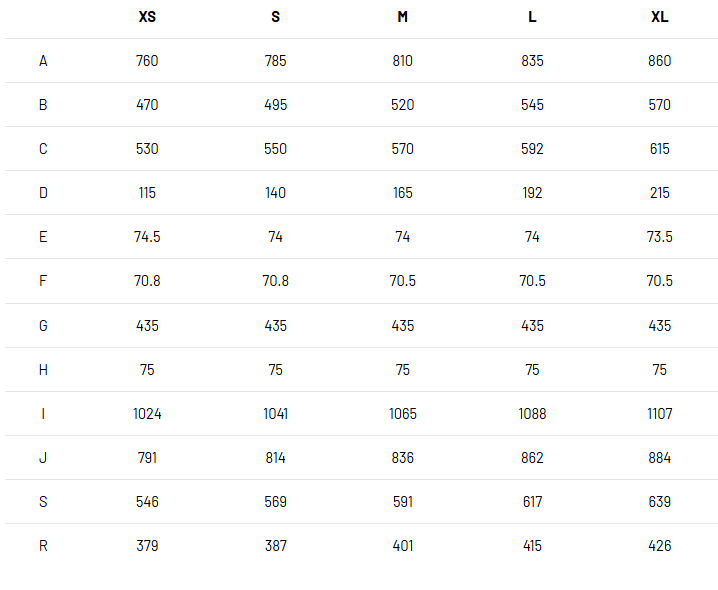
Source: Manufacturer geometry source
Provenance: published is present in the manufacturer data; derived is calculated by RideDNA; manual is a staff-entered reference rather than a manufacturer-chart value. “Not published” means the manufacturer did not provide a value for that size.
| Size | Stack | Reach | HTA | STA | ETT | Chainstay | Wheelbase | Front center | BB drop | Trail | Fork offset | Audit context |
|---|---|---|---|---|---|---|---|---|---|---|---|---|
| L | 617 mm published | 415 mm published | 70.5 ° derived | 74.0 ° derived | 592 mm derived | 435 mm derived | 1088 mm published | 664 mm derived | 75 mm derived | 75.0 mm derived | 50 mm derived | green |
| All 3 consistency checks passed | ||||||||||||
| M | 591 mm published | 401 mm published | 70.5 ° derived | 74.0 ° derived | 570 mm derived | 435 mm derived | 1065 mm published | 641 mm derived | 75 mm derived | 75.0 mm derived | 50 mm derived | green |
| All 3 consistency checks passed | ||||||||||||
| S | 569 mm published | 387 mm published | 70.8 ° derived | 74.0 ° derived | 550 mm derived | 435 mm derived | 1041 mm published | 616 mm derived | 75 mm derived | 73.0 mm derived | 50 mm derived | green |
| All 3 consistency checks passed | ||||||||||||
| XL | 639 mm published | 426 mm published | 70.5 ° derived | 73.5 ° derived | 615 mm derived | 435 mm derived | 1107 mm published | 682 mm derived | 75 mm derived | 75.0 mm derived | 50 mm derived | green |
| All 3 consistency checks passed | ||||||||||||
| XS | 546 mm published | 379 mm published | 70.8 ° derived | 74.5 ° derived | 530 mm derived | 435 mm derived | 1024 mm published | 600 mm derived | 75 mm derived | 73.0 mm derived | 50 mm derived | green |
| All 3 consistency checks passed | ||||||||||||
Overall consistency: green. This context is shown alongside the table so a rider can distinguish a complete published specification from a value that RideDNA had to derive or could not independently verify.
The Ridley Kanzo Adventure geometry specification reconciles within ±1mm engineering tolerance across all five sizes for stack, reach, and wheelbase. The forward model used Effective Top Tube (ETT) as the geometry anchor to establish BB horizontal position, with reach and wheelbase independently computed from this ETT-anchored position. The manufacturer has not published fork axle-to-crown length or fork offset, which prevented independent calculation of stack, reach, and wheelbase — all such checks are trivial passes reflecting the engine carrying through published values rather than independent geometric verification. An accurate and complete geometry specification from the manufacturer — including fork axle-to-crown length and fork offset — would provide greater clarity and enable full independent geometric verification.